Clay Jensen's grief and guilt over his loss
Thirteen Reasons WhyClay Jensen's grief and guilt over his loss are bound together by one remembered night: after Hannah Baker told him to stop, he left her room, and only later learned how much pain she had been carrying. Listening to Hannah’s tapes does not undo that departure, but it changes what Clay can know about it. His mourning grows out of the gap between the chance to stay and the fact that he left, while the story resists reducing Hannah’s death to a single exchange or to Clay alone.
The night that becomes the wound
During their time together, Clay and Hannah spoke with an ease that made each feel understood. Clay later recalls that they shared what excited and troubled them, and that he would have stayed until Hannah opened up. Yet he also recognizes the limit of that closeness: he wanted to tell her everything, but some of his own thoughts frightened or confused him, and it felt too soon to disclose them. The intimacy was real, but incomplete; neither could fully say what was happening inside.
At a crucial moment, Hannah told Clay to stop, and her hands stopped pulling him toward her. Clay was pushed back. The interruption recalls Hannah’s first kiss with Justin Foley and the way Justin had ruined what she remembered as her real first kiss. Clay does not have access to that history in the moment, but the tapes place it beside his memory, revealing how earlier hurt shapes Hannah’s response. The scene holds a painful contrast: Clay understands her words as a boundary and leaves, while Hannah later describes wanting him to tell her to stop leaving.
Clay remembers being afraid and leaving Hannah alone in the room. He imagines that she needed him and that he knew it, then indicts himself for letting fear decide what to do. Afterward, he slid from the bed to the floor, sat beside it with his knees drawn up, and cried. Hannah’s account calls this the end of Clay’s part in her story, but immediately challenges the finality of that ending: she says she was there for him, that he could have reached out, and that he chose to push her away. The opposed accounts make the scene more than a simple verdict. Both register a failure of connection, but they assign its meaning differently.
Listening, mourning, and belated understanding
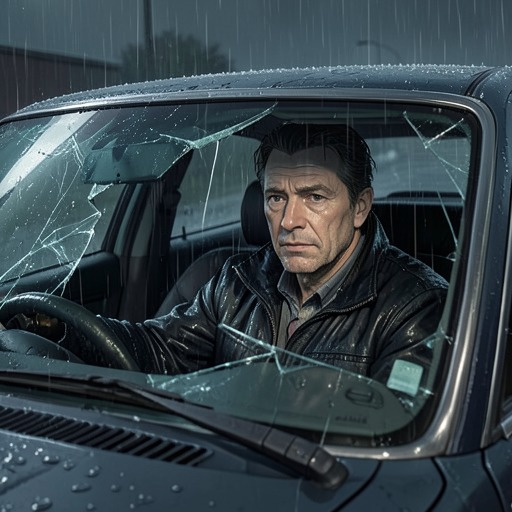
As the tapes bring Clay closer to Hannah’s experience, he asks Tony why he has to hear the story and says he would have been happier never hearing it. Tony answers that not knowing what happened would drive him crazy. Clay stares through the windshield at the white lines in the headlights and realizes Tony is right. The tapes make knowledge painful, yet ignorance would leave him trapped in a different kind of uncertainty.
Clay’s response shifts from distant admiration to grief grounded in new understanding. He tells Tony that he had liked Hannah from far away, but that their one night left him feeling he knew her even less than before. Now, after hearing what she was going through, he says he knows where her mind was that night. His voice breaks and tears come. Tony does not interrupt; he looks out at the empty street and allows Clay to sit in the car and miss her. Clay’s grief is physical and immediate, arriving with each breath, while his thoughts of Hannah make his heart feel warm against its coldness.
The tapes also sharpen Clay’s regret by making the missed opportunity specific. He recalls Hannah’s instruction to stop, but later wonders why he listened and why he left when he believed she needed him. He imagines the alternative: staying, reaching out, and helping. That imagined rescue remains an untestable possibility, not proof that he could have prevented her death. The difference matters: Clay’s guilt is emotionally real, while the narrative does not establish him as the sole cause of Hannah’s fate.
Blame, responsibility, and the limits of rescue
Clay repeatedly tests his guilt against the question of blame. He recognizes that he did not push Hannah away or deliberately hurt her; in his account, he did what she asked and left when he believes he should have stayed. He whispers that no one blames him, needing to hear the words aloud rather than keep them only in his head. Tony tells him twice that he does not blame him, including a direct answer when Clay asks specifically about Tony’s judgment.
Reassurance does not erase the counterfactual that torments Clay. Hannah’s account says he could have reached out and helped, while Clay’s own memory centers on obeying her request to stop. He carries both statements: the sense that another choice might have mattered and the recognition that the moment was frightening, confused, and incomplete. The tapes allow Hannah’s accusation and Clay’s self-defense to remain in tension instead of settling grief into a clean allocation of fault.
That tension sits within a wider pattern of failed recognition and help. In class, Mrs. Bradley invited students to use a paper bag on the bookrack for teaching feedback and suggestions for discussion topics. Hannah used it to propose a discussion of suicide, carefully rewriting the note many times before delivering it. When classmates responded that the anonymous writer merely wanted attention, the class did not reach a thorough discussion. Mrs. Bradley shared local statistics about how suicides among juveniles might go unreported when they occurred without public witnesses, leaving communities unaware of what people around them were facing. This episode makes Hannah’s difficulty in asking for help concrete: an available channel existed, but the response placed suspicion ahead of understanding.
Hannah’s later conversation with Mr. Porter similarly exposes the narrowness of the help she receives. Asked whether what happened with a boy might have been illegal, she answers that she does not think it was rape, but does not know. When she asks about her options, Mr. Porter offers confronting the boy or moving on. Hannah’s narrative voices the unanswered demand that he tell her what her options are and what can be done together; instead, the discussion reaches her conclusion that it is over. These scenes do not establish what intervention would have changed the outcome. They do show why Clay’s imagined power to save Hannah cannot be considered apart from the other moments when her distress was difficult to name and inadequately met.
The meaning of an incomplete connection
Hannah’s recollection of the room adds a detail that makes Clay’s guilt more complicated: after he left, she saw the shadow of his shoes beneath the door. She understood that he had stayed outside, and she began walking toward that sliver of light, unsure what she would say when she opened the door. Then two more pairs of shoes came into view, and she stopped. Clay’s departure, in her account, did not immediately close every possibility of contact; she approached the door, but another presence interrupted her movement. The scene preserves the moment’s uncertainty rather than turning it into a rescue that simply failed or a choice that can be explained away.
Clay’s grief becomes explicit when he tells Tony, “I miss her.” He adds that he had not really missed her until now, because he had not understood what had happened during their night together. With the tapes, he can finally connect Hannah’s outward presence to what she was going through, though that knowledge arrives too late for a conversation between them. His laugh after crying, and his thanks to Tony for listening, do not signal that the grief has ended; they show him trying to speak within it.
The account ultimately treats Clay’s mourning as both an intimate loss and a problem of belated knowledge. Hannah had believed she could tell him anything, and Clay believes he would have listened, but their shared openness never became full disclosure. Her tapes supply the testimony their night lacked, and Clay’s listening becomes a form of witnessing: he learns what he could not recognize then, and must live with what cannot now be repaired. His guilt remains part of that knowledge, but it is not the whole explanation of Hannah’s despair or death.